
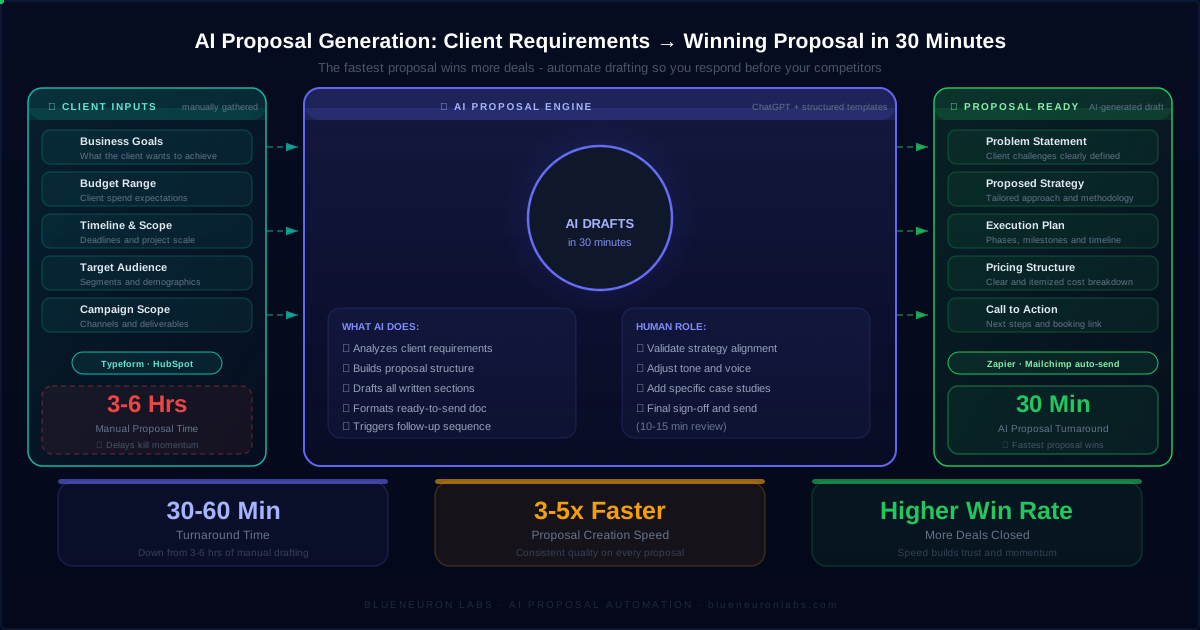
How Marketing Agencies Can Use AI to Generate Client Proposals Faster (and Close More Deals)
Introduction
In most marketing agencies, proposals are where deals are won or lost. You’ve had the call. The prospect is interested. The scope is clear. And then comes the delay.
The team needs time to draft the proposal, strategy needs to be written, pricing needs to be structured, and documents need to be formatted. What should take hours often stretches into days.
By the time the proposal is sent:
- The prospect’s urgency drops
- Competitors may have already responded
- Momentum is lost
👉 Speed is not just efficiency-it’s a competitive advantage.
Agencies that respond faster close more deals. This is where AI proposal generation changes the workflow. Instead of building proposals manually from scratch, agencies can now automate large parts of the process-reducing turnaround time, improving consistency, and increasing win rates.
In this guide, we’ll break down how to automate proposal creation step-by-step using AI.
The Problem with Manual Proposal Creation
Proposal creation feels like strategic work. But in reality, a large portion of it is repetitive, structured, and pattern-based. Yet most agencies still handle it manually.
1. It Takes Too Much Time: Typical proposal workflow can take 3–6 hours per proposal.
2. It Follows a Repetitive Structure: 70–80% of sections like company introduction, problem statement, and pricing repeat across every deal.
3. Quality Is Inconsistent: Different team members create different quality levels, leading to varied tone and clarity.
4. Delays Kill Momentum: The longer you take, the colder the lead becomes.
👉 The key insight: Proposal creation is not fully creative work. It is structured repetition with customization, which makes it ideal for automation.
Before vs After: Manual vs AI Proposal Workflow
| Step | Manual Proposal | AI Workflow |
|---|---|---|
| Requirement Gathering | Manual notes | Structured inputs |
| Draft Creation | From scratch | AI-generated draft |
| Customization | Manual edits | AI-assisted refinement |
| Delivery | Delayed | Fast turnaround |
This transforms proposals from slow and manual → to fast and scalable.
Step-by-Step AI Proposal Workflow
This is the exact system agencies can implement.
Step 1: Collect Client Inputs
What happens: Instead of unstructured notes, inputs are standardized to capture business goals, campaign requirements, budget range, timelines, and target audience.
Tools used: Typeform, HubSpot
Benefit: Reduces back-and-forth and improves AI output quality.
Step 2: Structure Proposal Framework
What happens: Create a standardized proposal template for sections like introduction, problem understanding, proposed strategy, execution plan, and pricing.
Tools used: Notion, Google Docs
Benefit: Ensures consistency and reduces thinking time.
Step 3: AI Draft Generation
What happens: AI generates the first version of the proposal, including problem statements, strategy outlines, and pricing explanations.
Tools used: ChatGPT
Benefit: Reduces drafting time from hours → minutes and removes the "blank-page" problem.
Step 4: Customization & Refinement
What happens: The AI draft is refined for personalization, tone adjustment, and strategic insights. Human validation remains critical for strategy alignment.
Benefit: Combines speed + expertise for higher quality output.
Step 5: Delivery & Follow-Up
What happens: Proposals are sent quickly and followed up automatically with reminders and meeting scheduling.
Tools used: Zapier, Mailchimp
Benefit: Improves engagement and increases conversion probability.
👉 This connects directly with how agencies Automate Your Sales Pipeline using AI.
See Other Automation Workflows:
Tools Used in Proposal Automation
Map tools to workflow:
| Workflow Step | Tools |
|---|---|
| Input Collection | Forms, CRM |
| Structuring | Docs, Notion |
| AI Drafting | ChatGPT |
| Editing | Docs |
| Delivery | Automation tools |
👉 See full breakdown: AI Tools Marketing Agencies Should Use in 2026
Business Impact (CRITICAL)
This is where proposal automation becomes a revenue driver.
- Before AI: Proposal time of 3-6 hours, delays in sending, and inconsistent quality.
- After AI: Proposal time of 30-60 minutes, faster turnaround, and consistent structure.
Measurable Impact:
👉 3–5x faster proposal creation
👉 Faster response time
👉 Higher win rates
👉 Better client experience
In many cases, the fastest proposal wins. Not because it’s perfect, but because it maintains momentum.
This is similar to the operational inefficiencies explained in The $3,000/Month Problem Inside 5–25 Person Agencies.
Proposal Workflow Overview
| Function | AI Solution |
|---|---|
| Drafting | AI generation |
| Editing | AI assistance |
| Delivery | Automation |
Frequently Asked Questions
Conclusion
Proposal creation is one of the most critical workflows in your sales process.
Yet most agencies still rely on:
- Manual drafting
- Delayed responses
- Inconsistent quality
AI transforms this completely. With AI proposal generation, agencies can respond faster, create consistent proposals, improve win rates, and scale their sales pipeline.
The shift is clear:
👉 From manual proposal writing
→ to
👉 Automated, intelligent proposal workflows
Agencies that adopt this approach will not just save time-they will close more deals.
🚀 Close More Deals with Faster Proposals
Most agencies lose deals not because of poor strategy-but because of slow execution. We build AI workflows that automate proposal generation for marketing agencies.
👉 Get your custom AI workflow for $199